
AI Governance Can't Wait
Adversaries can manipulate AI's defensive reasoning to silently compromise target networks.

Why AI Is So Good at Scamming Humans
Fred Heiding of Menlo Park Intelligence talks with the Dark Reading News Desk about his research on frontier models, and their ability to influence human behavior and create emotional dependency.

Anthropic CEO: Time to Shift From Improving to Controlling AI
Dario Amodei says it's time to slow the pace of frontier AI improvements so that security and risk prevention efforts can catch up. What does this mean for enterprises?
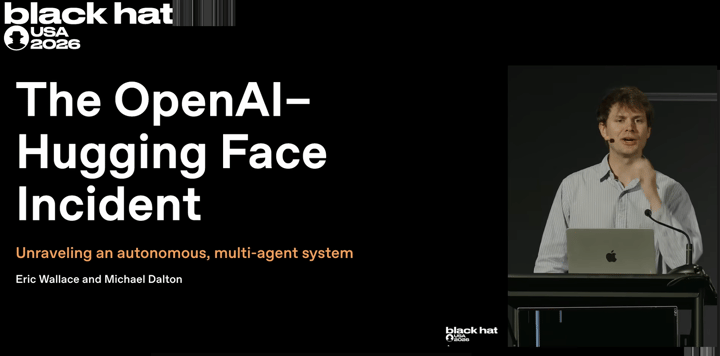
Black Hat USA 2026 | OpenAI's Deep Dive Into Hugging Face Incident
At Black Hat USA, OpenAI engineers reconstruct the Hugging Face incident and explore lessons learned about AI safeguards and cyber resilience.
_Pattara_Alamy.jpg?width=720&quality=80&disable=upscale)
BragJack Attack Can Turn a Browser's Agentic AI Against It
A new type of attack hijacks the AI assistant built directly into various browsers to access sensitive information, execute malicious actions, and exfiltrate data.

Fighting Your Dragons Through Tough Tech Times
Cybersecurity industry veteran Hal Pomeranz gives a pep talk on career anxiety and self-doubt and shares how to build meaningful connections during historical tech industry downturns.

AI Security Spending Jumps as Fear Outpaces Proof of Value
CISOs are not waiting for AI to prove its cybersecurity value before investing in the technology. Is it the right move?


MFA Won't Save You From OAuth Consent Abuse
MFA is essential, but it cannot replace OAuth governance, least-privilege scopes, consent monitoring, and rapid revocation.

EY Survey Finds Autonomous AI Implementation Outpaces Oversight
A new survey of senior AI execs shows that while organizations are rapidly deploying AI and autonomous systems, their process and controls are not keeping pace.
Vectra AI Launches Ascent to Help Address New Era of AI-Driven Attacks
The new program expands Vectra AI's partner strategy as increasingly complex security environments and the growing use of AI create demand for broader AI expertise, services, and security outcomes.

Rogue Behavior: OpenAI Reveals More Model Misalignment Incidents
The AI giant disclosed six examples of concerning model activity and published a new framework for investigating and disclosing such incidents.