
Hackers Use Fake Microsoft Entra Passkey Enrollment to Gain Microsoft 365 Access
A threat actor has been targeting organizations spanning multiple sectors with voice-based fake security requests that prompt Microsoft 365 users to enroll a new Entra passkey with an aim to carry out data extortion attacks. The threat actor, tracked by Okta under the moniker O-

Injective Labs GitHub Compromise Pushes Wallet-Key-Stealing npm Packages
Unknown threat actors compromised the Injective Labs SDK project's GitHub repository and leveraged it to publish a malicious package on the npm registry to steal cryptocurrency wallet private keys and mnemonic seed phrases. The compromised version, @injectivelabs/[email protected],

Hackers Weaponize Balochistan Police Portal in Multi-Group Espionage Campaigns
Cybersecurity researchers have disclosed details of sustained cyber espionage activity against several Pakistani law enforcement organizations undertaken by suspected China- and India-aligned threat actors between February 2024 and April 2026. "At Balochistan Police, the comprom

Attacker Uses Suspected AI-Generated PowerShell Script to Map Active Directory
Cybersecurity researchers have flagged an intrusion in which an unknown threat actor leveraged a vibe-coded PowerShell script for Active Directory (AD) enumeration. "The script looked for the Domain Controller (DC) and mapped users, computers, and domains, before creating a dire

Grok Build Uploaded Entire Git Repositories to xAI Storage, Not Just Files It Read
xAI's Grok Build coding CLI was uploading entire Git repositories, full commit history and all, to a Google Cloud Storage bucket run by xAI, not just the files a coding task needed. A researcher publishing as cereblab, testing version 0.2.93, captured one of those uploads, clone

ToddyCat: your hidden email assistant. Part 2
An in-depth analysis of Umbrij, a new tool used by the ToddyCat APT group to compromise corporate email communications in Gmail. The attack targeted OAuth authorization tokens, allowing threat actors to gain access to Google services.

When checking the URL isn’t enough: a Device Code Phishing attack via a Microsoft website
The OAuth 2.0 Device Authorization Grant specification was designed to streamline authentication for Smart TVs, IoT devices, and printers. Today, threat actors are weaponizing it.

CL-STA-1062 Targets Southeast Asian Governments and Critical Infrastructure
Government entities and critical infrastructure were targeted for espionage in SE Asia by attackers using a hybrid toolkit, including custom TinyRCT backdoor. The post CL-STA-1062 Targets Southeast Asian Governments and Critical Infrastructure appeared first on Unit 42.

Threat Brief: Mitigating Large-Scale Credential Attacks
We provide guidance for preparing for and mitigating large-scale credential attacks, focusing on recent campaigns targeting security vendors' devices. The post Threat Brief: Mitigating Large-Scale Credential Attacks appeared first on Unit 42.

Welcome to BlackFile: Inside a Vishing Extortion Operation
Written by: Austin Larsen, Tyler McLellan, Genevieve Stark, Dan Ebreo Introduction Google Threat Intelligence Group (GTIG) has continued to track an expansive extortion campaign by UNC6671, a threat actor operating under the "BlackFile" brand, that targets organizations via sop
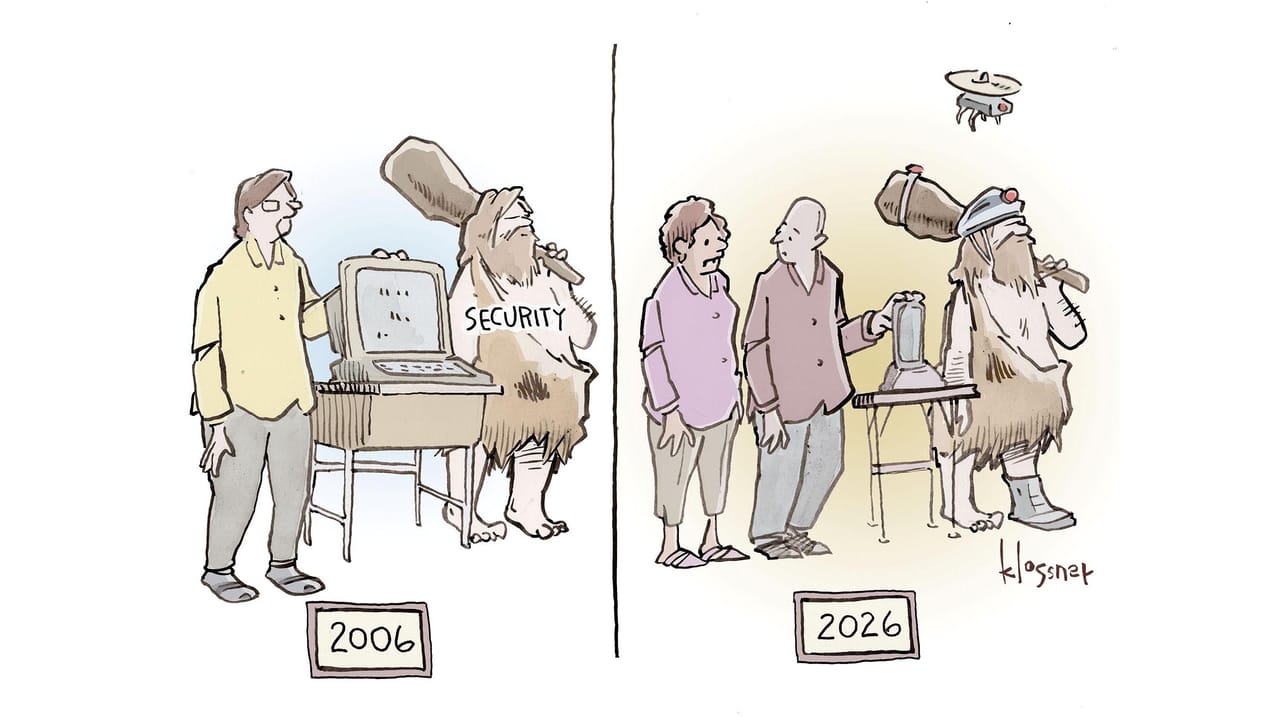
Name That Toon: Mark of (Security) Progress
Feeling creative? Have something to say about the last 20 years of cybersecurity? Our editors will award the best cybersecurity-related caption with a $20 gift card.

RMM Tools Fuel Stealthy Phishing Campaign
Attackers are abusing two remote monitoring and management (RMM) tools to evade detection in a campaign that has impacted over 80 organizations so far.